

These facts and figures provide an easy and impactful way to raise awareness and understanding of the challenges of living with a rare, genetic or undiagnosed condition in the UK. We encourage use of the information here in our member organisations’ own reports and other content.
Please review our citation policy if you use any of Genetic Alliance UK’s content or graphics.
Rare conditions
Figures from UK Rare Diseases Framework (Department of Health and Social Care, 2021)
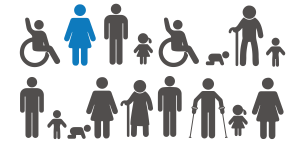
- Rare conditions are individually rare but collectively common, with over 3.5 million people in the UK living with a rare condition
- A rare condition is a condition that affects fewer than 1 in 2,000 people
- There are around 7,000 rare conditions, with new conditions regularly identified through scientific progress
- 1 in 17 people are affected by a rare condition at some point in their lives
- 7 in 10 rare conditions affect children
- More than 3 out of 10 children with a rare condition die before their fifth birthday
Download our factsheet with more information about rare conditions.
-
3.5
million people in the UK are living with a rare condition
-
1 in 17
people are affected by a rare condition at some point in their lives
-
7 in 10
rare conditions affect children
Genetic conditions
Figures from UK Rare Diseases Framework (Department of Health and Social Care, 2021)
- 8 in 10 rare conditions are caused by a change to someone’s genetic code
- Some rare gene disorders affect only 1 or 2 people in the UK and a handful of people around the world
- Some people may be the only person in the world affected by a particular change to their genetic code
- Every year around 6,000 children in the UK are born with a genetic condition so rare that it does not yet have a name. This might be because the right test has not yet been developed to diagnose it, or the genetic cause of the condition has not been discovered. An undiagnosed genetic condition is known as a ‘syndrome without a name’ or SWAN
-
8 out of 10
rare conditions are caused by a change to someone’s genetic code
-
6000 +
children in the UK each year are born with a genetic condition so rare that it does not yet have a name
Diagnosis
1 in 4 people wait at least 3 years for a rare condition diagnosis
The most recent data on time-to-diagnosis for people with a rare condition shows that 1 in 4 in the UK waited at least 3 years between the first symptoms showing and receiving a confirmed diagnosis. The same data indicates that for the vast majority (95%) of the 3 year wait, people were within the healthcare system i.e. they were actively seeking help from the health service.
In contrast, 1 in 2 people with a diagnosed rare condition waited approximately 5 months.
This data is taken from a 2022 Rare Barometer survey by EURORDIS-Rare Disease Europe that attracted 490 UK respondents. Between them, the respondents are living with 185 rare conditions. The survey collected data from 41 European countries in total, and taken together, 1 in 4 of the European respondents waited at least 5 years for a confirmed diagnosis.
Data about time to diagnosis can be difficult to communicate. A simple ‘mean’ or average can be misleading when some people continue to experience a very long diagnostic journey, even if many are able to reach a confirmed diagnosis more quickly.
The picture is further complicated when new scientific discoveries lead to the diagnosis of previously ‘unsolved’ or undiagnosed conditions.This is good news but can mean any accurate measure of time to diagnosis would become longer, at least for a while as new people move into the ‘diagnosed’ category, after a long wait, who were previously uncounted in this data. This should not be seen as a negative when it reflects progress, such as the discovery of the gene responsible for the neurodevelopmental condition, ReNU syndrome.
Genetic Alliance UK are adopting the statistic in the title above: 1 in 4 people wait at least 3 years for a rare condition diagnosis. This will align us with the latest UK data and reflect the varied diagnosis experiences of people with rare conditions.
Download our factsheet with more information about diagnosis.
Daily treatment and management (care coordination)
Figures from CoOrdinated Care of Rare Diseases (CONCORD) research study (2020)
- Only 1 in 10 adults in the UK living with a rare condition have a care coordinator to help organise different aspects of their care
- Only 1 in 10 adults and 4 in 10 children in the UK living with a rare condition have a care plan in place
Download our factsheet with more information about care coordination.
Treatment
Figures from Fermaglich et al, ‘A comprehensive study of the rare diseases and conditions targeted by orphan drug designations and approvals over the forty years of the Orphan Drug Act’, Orphanet Journal of Rare Diseases (2023)
- Only 1 out of 20 rare conditions have an approved treatment or medicine to help. This is partly due to the small number of people affected by each rare condition
Download our factsheet with more information about access to medicines.
-
1 in 10
adults in the UK living with a rare condition have a care coordinator
-
1 in 10
adults and 4 in 10 children in the UK living with a rare condition have a care plan in place
-
1 in 20
rare conditions have an approved treatment or medicine to help
Screening
Figures from Loeber et al, ‘Neonatal Screening in Europe Revisited: An ISNS Perspective on the Current State and Developments Since 2010’, International Journal of Neonatal Screening (2021)
- Newborn screening programmes in the UK are lagging behind similar programmes in other countries. The newborn ‘blood spot’ screening tests in the UK screens for 9 genetic and rare conditions (soon to be 10 with the decision in 2023 to add tyrosinemia type 1)
- More than 20 European countries screen for more conditions than the UK, with most of them screening for more than 20 conditions whilst the US screens for up to 50
Download our factsheet with more information about screening.