
Aiza’s Story
Aiza was diagnosed with Molybdenum Cofactor Deficiency (MoCD), an ultra-rare genetic condition, just days after her birth. Through sharing Aiza’s journey, her family hopes to raise awareness of rare conditions and help others facing similar paths feel less alone.
Aiza came into the world like any other baby. Surrounded by hope, love, and all the quiet expectations parents naturally carry into the future. In those first moments, nothing suggested anything unusual. There was no reason to imagine her path would be anything other than ordinary. But within a very short time, things began to feel different. Subtle at first, almost easy to dismiss, yet something was changing. There were signs. Small at times, unclear at others. The kind that leave you wondering whether you’re imagining things or picking up on something real beneath the surface. By the end of her first day, those early uncertainties had deepened.
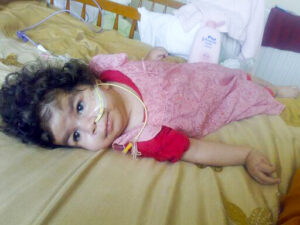
After just over a week in hospital, Aiza received a diagnosis of Molybdenum Cofactor Deficiency (MoCD), an ultra-rare genetic condition that many clinicians may never encounter in their careers. Among the very limited cases documented globally, Aiza is thought to be one of the longest surviving children with early-onset MoCD Type A, a form of the condition where most children do not survive beyond early childhood. With that diagnosis came a reality that is difficult to fully capture in words.
MoCD is more than a medical label. It represents a life shaped by uncertainty, complexity, and an emotional weight that extends far beyond clinical descriptions. For families, it means learning to live in a world where certainty is rare, where time feels different, altered, and where even ordinary moments carry extraordinary meaning. In ultra-rare conditions like this, that sense of isolation can become even more profound, coupled with denial and the unknown.
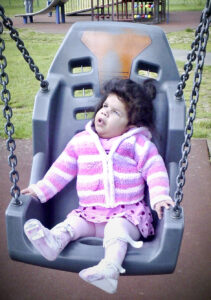
And yet, within that reality, there were moments of light that remain unforgettable. As she grew, Aiza developed a very distinctive laugh. A belly laugh. It was deep, wholehearted, and unmistakably genuine. It wasn’t something she expressed often or automatically. She seemed to choose when it appeared, and with whom. But when it did, it filled the space completely. She also had a remarkable, unspoken way of communicating. Her eyes often conveyed what words never could. Recognition, emotion, connection. There were times when she seemed especially attuned to her surroundings, reacting in subtle but clear ways. Moments of discomfort or change that suggested an awareness beyond what could easily be explained. In her own quiet way, she communicated what she was experiencing, good or bad.
These qualities came to define her far more than any diagnosis ever could. Not the condition. Not the medical terminology. But her presence, her sensitivity, and the way she connected to the world around her. This journey was never only about understanding a rare disease. It was not about the condition that she had. It was about navigating the unimaginable, making sense of uncertainty, and holding tightly to what truly matters when everything else feels fragile.
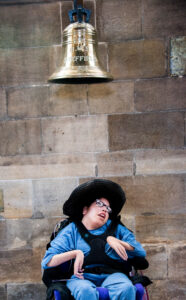
Aiza’s story is being shared because conditions like MoCD remain largely unknown, even though they profoundly shape the lives of the families who face them. There are others on similar paths, families and people all searching for understanding while living through experiences that few can truly comprehend. If sharing her story helps even one person feel less alone, or brings greater awareness to Molybdenum Cofactor Deficiency, then it carries meaning beyond the words themselves.
Aiza’s life, her journey, and her story deserve to be remembered.
If her story resonates with you, please share it. Awareness is how rare conditions like MoCD begin to move out of isolation and into understanding.