
Speakers at the LifeArc Translational Centres for Rare Disease Annual Showcase in November 2025. Photo: LifeArc
Since publishing our report ‘Involvement by design: How to address structural and cultural barriers to PPIE in academic research’ in January 2026, we have been encouraged by the response from across the research community.
In this follow-up blog, we want to highlight where meaningful patient and public involvement and engagement (PPIE) is already taking shape, and how organisations and individuals are beginning to put the report’s recommendations into practice.
A starting point for a conversation around barriers to PPIE
A number of stakeholders have shared with us that the report resonated because the structural and cultural barriers it describes feel all too familiar. Researchers, PPIE professionals and contributors often find these challenges, such as uneven access to training and support, reimbursement and struggles to maximise diversity and inclusion, arise when the burden falls to individuals to deliver PPIE.
‘My experience of trying to involve patients and the public in my research is that we lack the resource and infrastructure to sustain meaningful institutional engagement. I was delighted to contribute my experiences to a participatory workshop capturing the facilitators and barriers to PPIE in research.’
Dr Shwetha Ramachandrappa (Guy’s Hospital and Trustee of Unique), who also participated in our workshop in June 2025
A recent report from Sheffield Hallam University, ‘Battling on multiple fronts’, similarly highlighted institutional barriers to public involvement in university research and teaching. Alongside a recent editorial about the visibility of PPIE, this reinforces the message that these issues are sector wide.
Creating space to reflect and make PPIE more ‘meaningful’
One of the strongest messages from the report is that responsibility for delivering meaningful PPIE cannot rest with individual researchers alone. Alongside formal training, peer learning is particularly powerful, and networks that create space to share and learn from experience are invaluable for supporting researchers, PPIE staff and patient communities as they build confidence and capability.
For example, we presented findings from the report alongside some of our member organisations at an event focused on ‘demystifying the connection between patients and researchers’ hosted by the King’s Health Partners (KHP) Rare Disease Network on 6 March 2026. These communities of practice reflect the report’s call to make space for reflection on what could be done better, not just success stories.
‘Rare Disease Research UK incorporates the whole spectrum of research, from basic science to translational research, all of which benefit from good PPIE. However, it can be especially challenging to integrate PPIE into basic science programmes, so institutional support as outlined in the Involvement by Design report is critical.’
Dr Amy Hunter, PPIE Lead for the Rare Disease Research UK Hub and Director of Research at Genetic Alliance UK
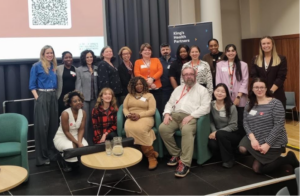
Genetic Alliance UK took part in a panel with representatives from the KHP Rare Disease Network, the Sickle Cell Society and the James Lind Alliance Priority Setting Partnership at King’s College London.
Championing the role of PPIE in rare disease research
Encouragingly, we are seeing examples of institutions and funders exploring how to embed involvement through collaborative initiatives, making it clear that PPIE is viewed as essential in research, particularly when it comes to innovation for new diagnostics and treatments for rare conditions.
In parallel to the workshop that Genetic Alliance UK delivered (with Rare Disease Research UK and the LifeArc Translational Centres for Rare Disease) that focused on the researcher experience, LifeArc has developed a set of recommendations with the Charities Research Involvement Group (CRIG) and the Translating and Accelerating Research (TAR) Network. The resulting report draws on findings from an event held with patient organisations, including a number of Genetic Alliance UK member organisations.
These efforts signal growing recognition that PPIE is a shared responsibility across the research ecosystem, a message that is also reflected in LifeArc’s Patient Engagement Strategy. This message is also applied to rare condition research in a recent policy report that Genetic Alliance UK developed on behalf of the LifeArc Translational Centres for Rare Disease Hub called ‘More trials, better data, faster access’.
Genetic Alliance UK recently hosted a parliamentary drop-in with LifeArc to launch the report and provide a space for representatives from the Centres, including a number of rare condition support groups who are Genetic Alliance UK members, the opportunity to meet with Members of Parliament to hold joint discussions on the importance of partnership to achieve innovation in translational research for rare conditions.
‘‘It’s very clear that we need to have a joined-up approach across different stakeholders to address the barriers. Providing more structural support for PPIE will help increase confidence amongst researchers, and make it easier for those getting involved.’
Dr Natasha Ratcliffe, Principal, Patient Engagement, LifeArc
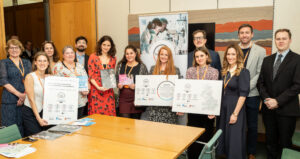
Attendees of the parliamentary drop-in that Genetic Alliance UK organised for LifeArc, researchers and patient support groups representing the LifeArc Translational Centres for Rare Disease on 17 March 2026.
Joining the conversation
With a lens on implementation of the report’s recommendations, Genetic Alliance UK is also continuing to work with Beacon for Rare Diseases through the LifeArc Hub, and separately with Rare Disease Research UK, to understand where researchers and PPIE contributors need better support to develop the skills and confidence needed for meaningful PPIE.
We will be continuing the conversation at the third annual Rare Disease Research UK conference on 19 April 2026 in Birmingham. This year will focus on ‘the power of collaboration’ and the winners of the Early Career Researcher Award in PPIE will be announced. Find out more about the RDRUK conference and how to register here.
As you read the Involvement by Design report, we invite you to reflect on which recommendations resonate most strongly with you, either because your organisation already addresses them well or because they highlight a key unmet need – and to consider how you could champion change in your world where it is needed.
For any questions about the report, or opportunities to collaborate on PPIE with Genetic Alliance UK, please email: Amy Hunter, Director of Research ([email protected])