A shift towards more pilots for evidence generation
A year on since publishing this report, instead of making new recommendations, the UK NSC is scaling up its use of ‘in-service evaluations’ (ISEs). These are a pilot introduction to screening with no fixed end date, and the UK NSC positions them as a means to collect more evidence on screening for a condition without formally recommending them. We have raised a number of challenges with this approach in the past.
Nonetheless, it has enabled progress in some areas. Since Scotland began an ISE for spinal muscular atrophy (SMA) in 2025, the programme has already identified one baby born with SMA, which as result, has been able to start treatment with gene therapy. Following a large campaign by our member organisations, including Spinal Muscular Atrophy (SMA) UK and Muscular Dystrophy UK, as well media coverage of the singer Jesy Nelson, England moved forward plans to start an ISE for SMA. The ISE started today (1 October) and will be rolled out to the rest of England by October 2027.
We welcome this news, however there are other conditions where screening is urgent. For example, the UK NSC’s recent decision to not recommend screening for metachromatic leukodystrophy (MLD), despite significant work by our members that are part of the Newborn Screening Collaborative, was extremely disappointing.
EquipoISE – a proposal to evaluate multiple new rare conditions
This is why we’d like to draw attention to one other positive development. In January 2026, the UK NSC published a proposal for a multi-condition ISE, called ‘EquipoISE’. This is intended to pilot screening for up to 10 new rare conditions in England at once.
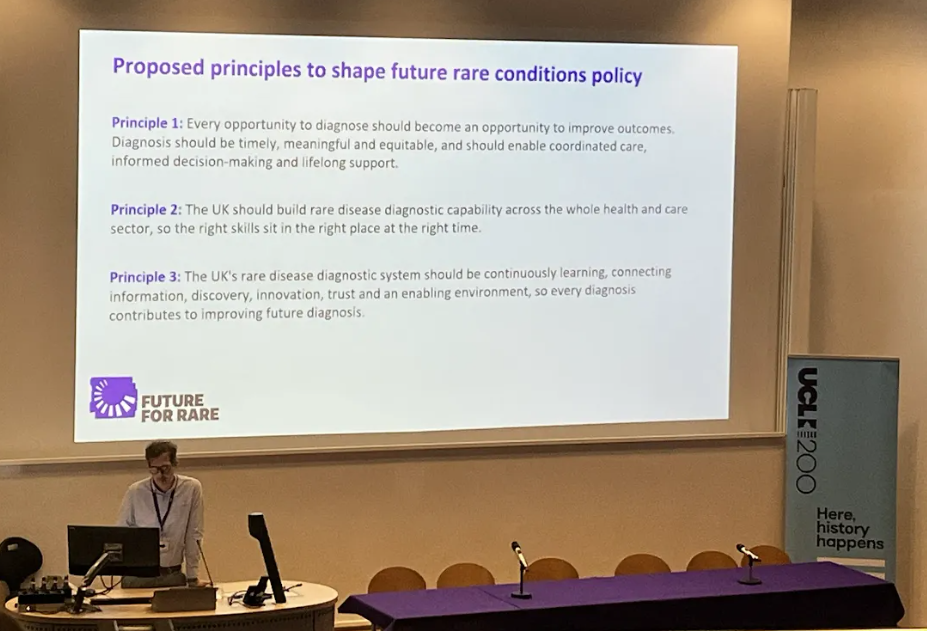
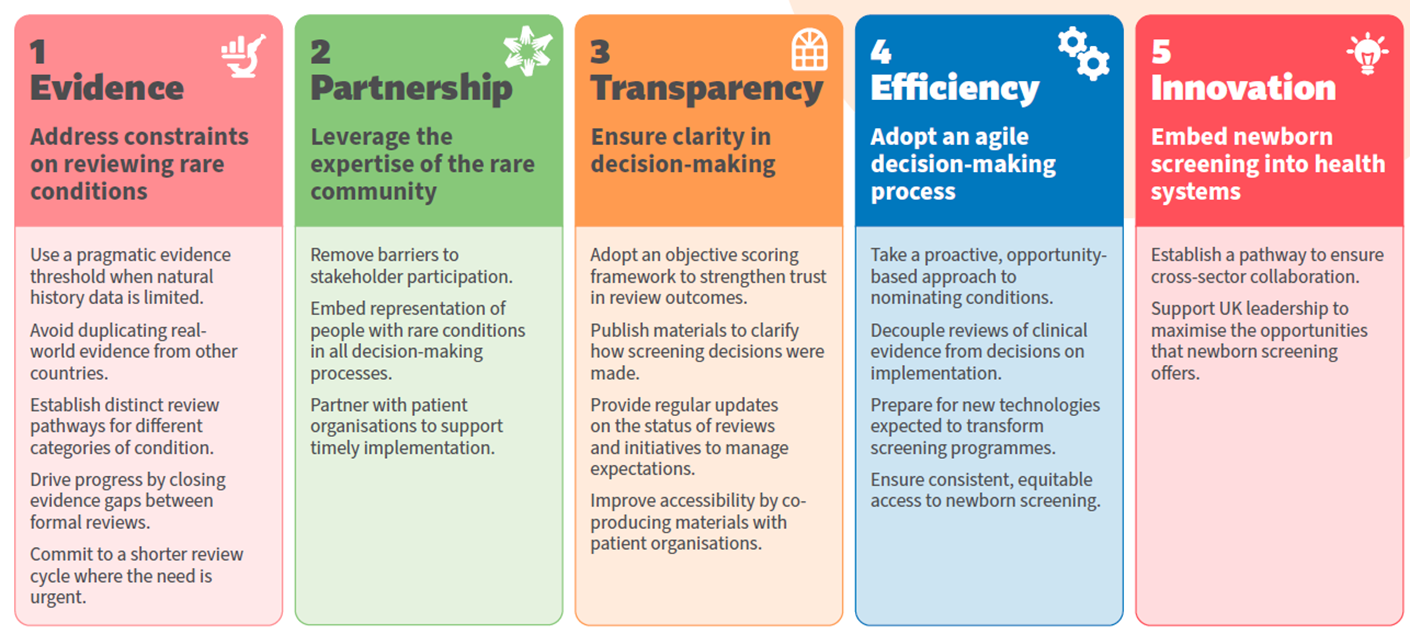
While we do not believe EquipoISE will resolve all of the challenges presented in our Time to Decide report, including the need for a more responsive and proportionate approach to decision-making for screening for rare conditions, we do welcome the UK NSC’s ambition to progress screening for rare conditions. Our Chief Executive, Nick, recently took part in a panel event with the UK NSC for a symposium celebrating 40 years of the British Paediatric Surveillance Unit at the UCL Great Ormond Street Institute of Child Health. As he explained:
‘EquipoISE will need to be UK-wide in its delivery of screening pilots. Without this, it will take too long to generate sufficient evidence on many rare conditions and cause further delays, during which access to screening will be inequitable.’ – Nick Meade, Genetic Alliance UK
The UK NSC’s Blood Spot Task Group (BSTG) July meeting focused specifically on EquipoISE, and how to select which conditions will be included in the ISE. We will continue using our involvement in the BSTG to press for meaningful engagement with our community, and for more transparency about how this large programme of work is developing.
What is the end goal for UK policy on newborn screening?
As the UK moves towards ‘recruitment completion’ of the Generation Study, the evidence it has generated on the use of whole genome sequencing to screen newborns in England has proven important in informing what role genomics might play in the future.
The Study has resulted in the earlier diagnosis of a number of children living with rare conditions, such as two brothers born with adrenoleukodystrophy (ALD), and enabled discoveries into less well understood ultra-rare conditions.
Findings from Genetic Alliance UK’s role in the independent evaluation of the Study have also reinforced why support organisations need to be considered as an essential part of the infrastructure of any future screening programme. So the question remains – what comes next? And how will the findings from genomic sequencing of 100,000 newborns in England inform policy on conventional newborn (blood spot) screening across the UK?
Consensus from our community developed through our Future for Rare campaign has reinforced that expanding screening is an essential part to unlocking innovation across a person’s whole life – that we need to ‘find’ people living with rare conditions. This is not just to enable us to make decisions about screening, but to unlock research opportunities and support decision-making about new medicines, healthcare service delivery and more.